
CASE STUDY · MK Farm
Taking daily farm records from the field to reporting
MK Farm brings animal-level operational records into one digital logbook. Owners and staff work with the same current data, from quick entries in the field to management reports.
- Sector
- AGRICULTURE & LIVESTOCK
- What we built
- Custom software · Business systems
- Status
- Live demo
Whose problem?
Farms managing beef and dairy animals, staff and daily care records together. They need quick access to animal history in the field and the ability to report on the same record in the office.
- Owners managing one or more farms
- Field staff entering weight, milk, health and breeding records
- Managers following animal history and upcoming checks
- Teams preparing periodic production and operations reports
What was the problem?
When animal details, weighing, milk, treatment and breeding records stay in separate notebooks, history is harder to follow and upcoming work is easier to miss. Field connectivity can also delay recording.
- Current animal state and history being held in different places
- Not reaching the right animal quickly from its ear tag
- Missing check dates, medicine withdrawal periods and repeat procedures
- Delaying or re-entering field records when the connection drops
How did we approach it?
We built the data model around the animal lifecycle, turning daily work into short forms and management needs into filterable reports and alerts. The offline queue is treated as part of field use, not an afterthought.
- Access separated by farm membership and owner-staff roles
- Fast entry to an animal card through ear tags and QR
- Separate but connected flows for weight, milk, health and breeding
- Controlled synchronization and conflict handling when connectivity returns
Field records, animal history and reporting in one system
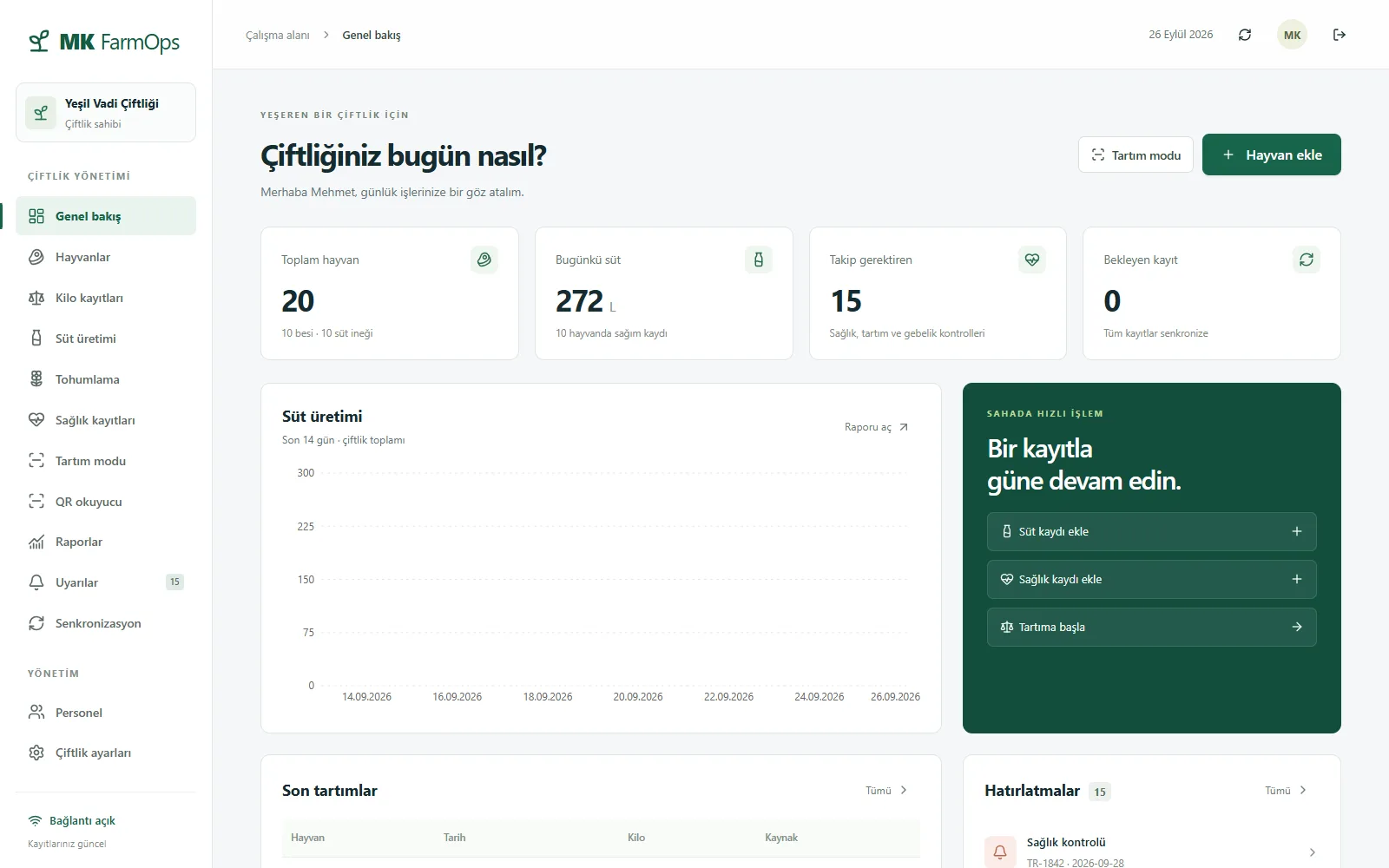
MK Farm combines multi-farm membership, role-based access and animal lifecycle records with a real API and persistent database. Its responsive PWA supports offline use of previously loaded data and later synchronization of queued records.
The resulting system
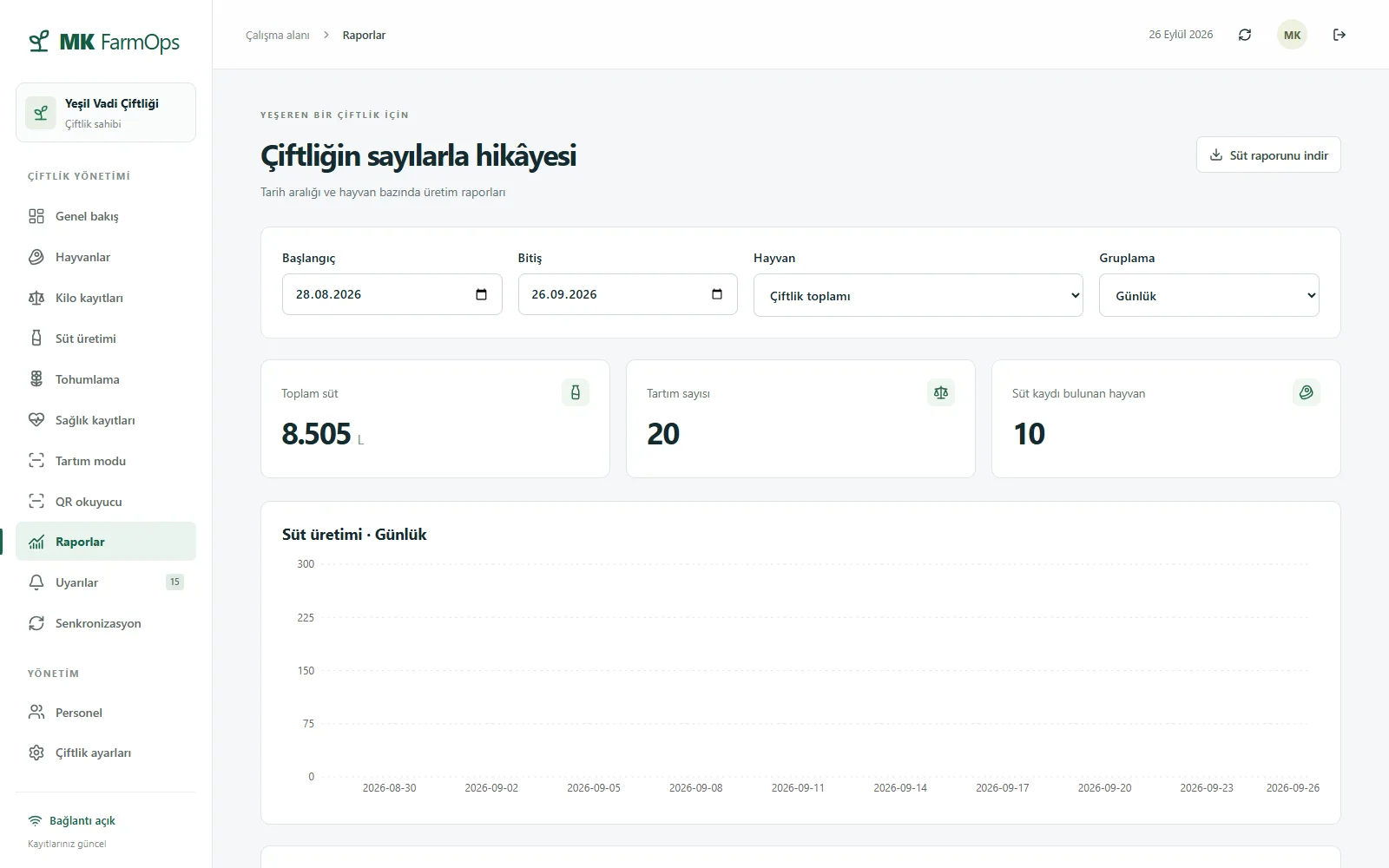
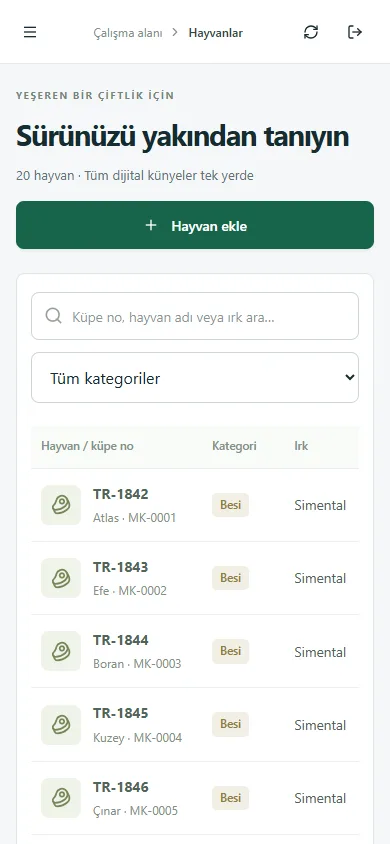
These screens use entirely fictional records generated by the product's local demo loader; the people, farm, animals and ear tags shown are not real records.
Core modules
Farms and staff
Owner and staff memberships, approval states and the active workspace are managed together.
Animal cards
Identity, ear tag, state and lifecycle details for beef and dairy animals stay on one card.
QR identity
QR display, printing and access through a camera or external scanner open the animal card.
Weight and weighing
Manual or mock-scale entries, measurement history and change from the previous weight are tracked.
Milk production
Morning and evening milk records are entered by animal and date, then combined in period reports.
Health and breeding
Examinations, medicine, veterinary checks and breeding history are connected to the animal card.
Alerts and reports
Upcoming checks and operational exceptions are listed; milk and farm data can be exported.
Offline synchronization
Records remain in a device queue and are sent with version and conflict checks when connectivity returns.
Where is it today?
- MK FarmLive demoOpen live demo
Related work
Related solutions
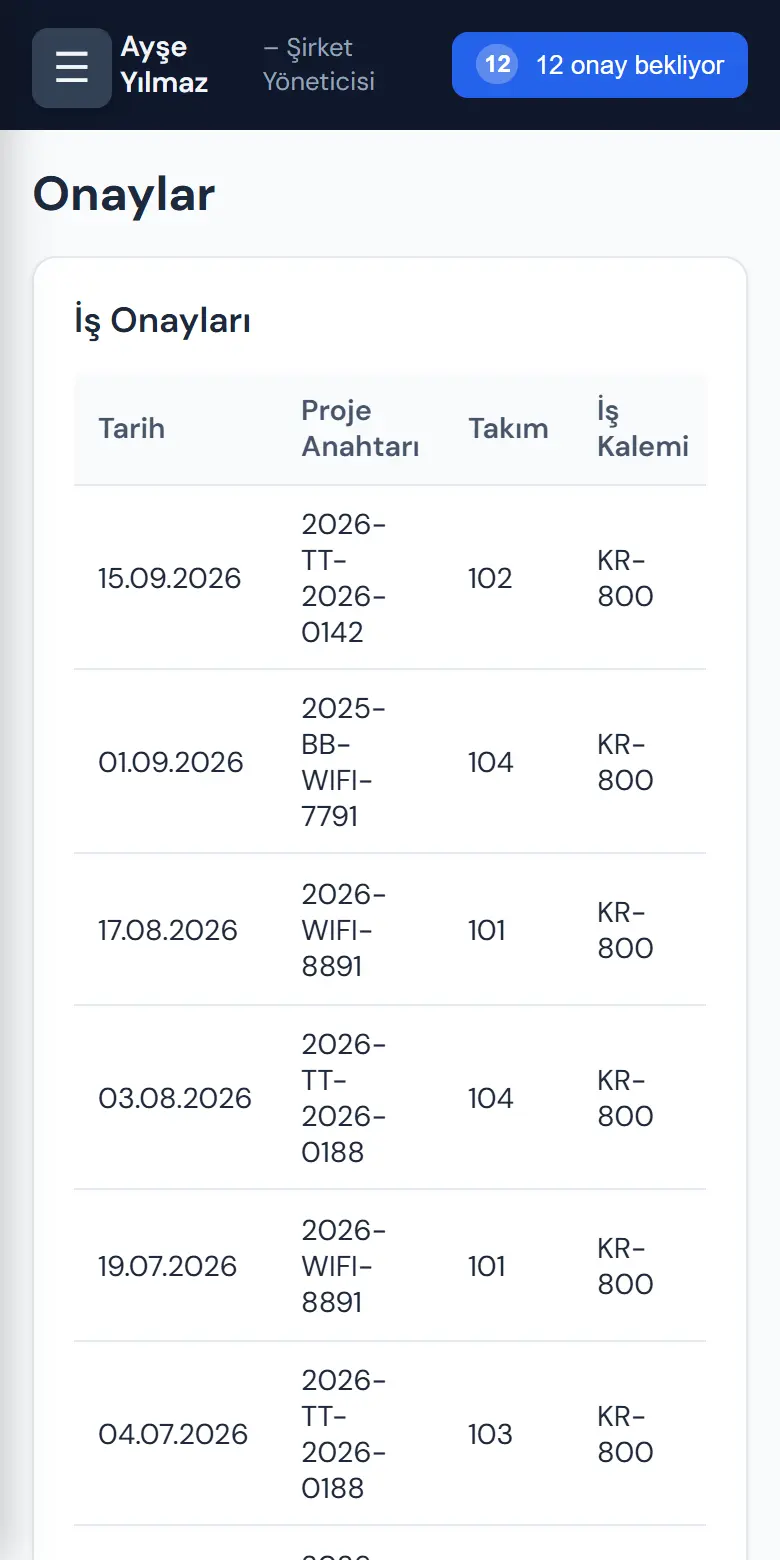
Field & Site Operations
Operations systems for telecom and fibre field companies, built with two different approaches to the same problem.
MK OPS · Product website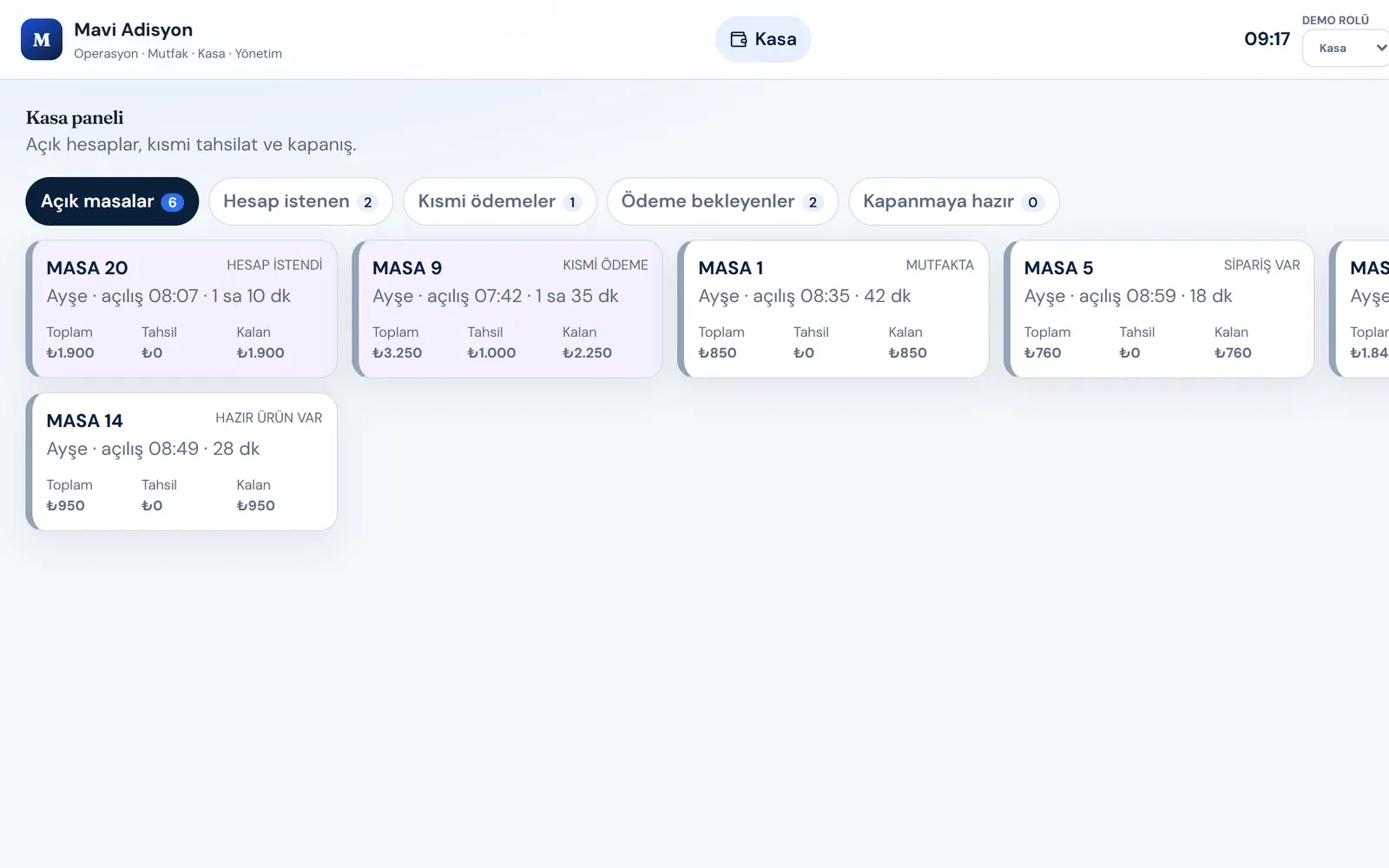
MK Adisyon
An ordering and bill product for restaurants and cafés, with a working web system and a mobile app in closed testing.
Web app · Open live demo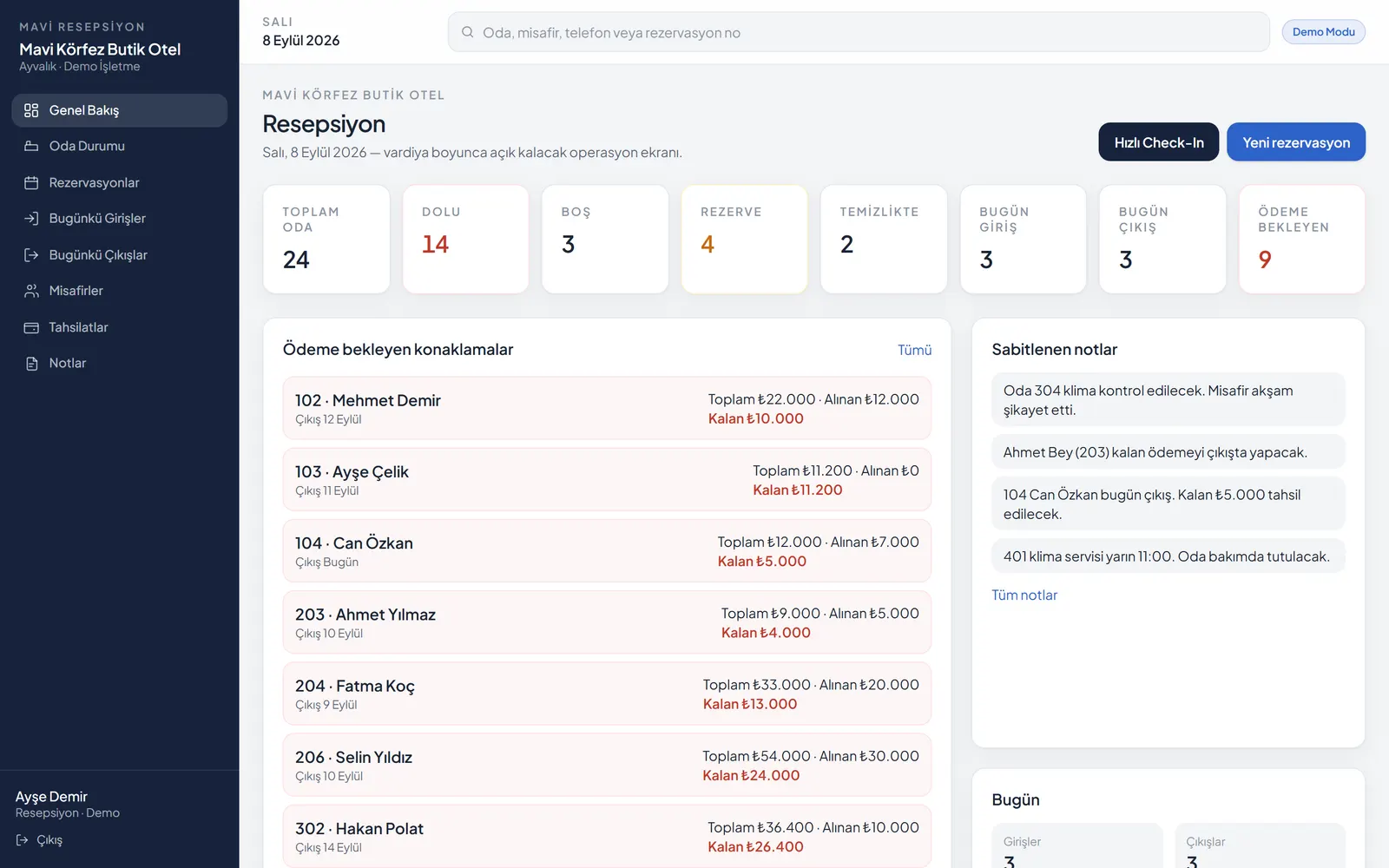
MK Resepsiyon
An operations system for hotels and guesthouses connecting the room plan, check-in and payments.
Open live demoFacing a similar problem?
If you want field records, animal history and reporting to share one workflow on your farm, let’s review how your team works today.